


If you own a home or are thinking about buying property in Florida, you probably wonder: How much is property tax in Florida? Property taxes can affect your monthly costs and even your decision to buy. Florida is famous for its sunny weather and no state income tax, but property tax rules are different. The rates vary by county, city, and property type. Understanding property tax in Florida helps you plan, save money, and avoid surprises. In this article, you’ll learn about average tax rates, how property taxes are calculated, exemptions, payment deadlines, and tips to lower your bill. Let’s break down everything you need to know so you feel confident as a Florida homeowner.
Florida Property Tax Rates: What You Need To Know
When people ask How much is property tax in Florida?, the answer depends on where you live and the value of your property. Florida does not have a single statewide property tax rate. Instead, each county and city sets its own rate, called a millage rate. The millage rate is the amount of tax per $1,000 of assessed property value.
Most Florida counties have millage rates between 10 and 25 mills. For example:
- Miami-Dade County: Around 16.8 mills
- Broward County: About 18.6 mills
- Orange County: Around 17.8 mills
This means if your home is assessed at $250,000 and your local millage rate is 18 mills, your property tax would be:
$250,000 ÷ 1,000 X 18 = $4,500 Per Year
Below is a comparison of millage rates in three popular Florida counties:
| County | Average Millage Rate | Annual Tax for $300,000 Home |
|---|---|---|
| Miami-Dade | 16.8 | $5,040 |
| Broward | 18.6 | $5,580 |
| Orange | 17.8 | $5,340 |
How Property Taxes Are Calculated In Florida
Understanding how property taxes are calculated is essential for Florida homeowners. The process involves three steps:
- The property appraiser in your county estimates the market value of your home.
- Certain exemptions and caps may lower your taxable value.
- The millage rate is applied to the taxable value.
For example, if your home’s market value is $350,000 and you qualify for a $50,000 homestead exemption, your taxable value becomes $300,000. If your local millage rate is 19, your yearly tax is:
$300,000 ÷ 1,000 X 19 = $5,700
What Is The Homestead Exemption?
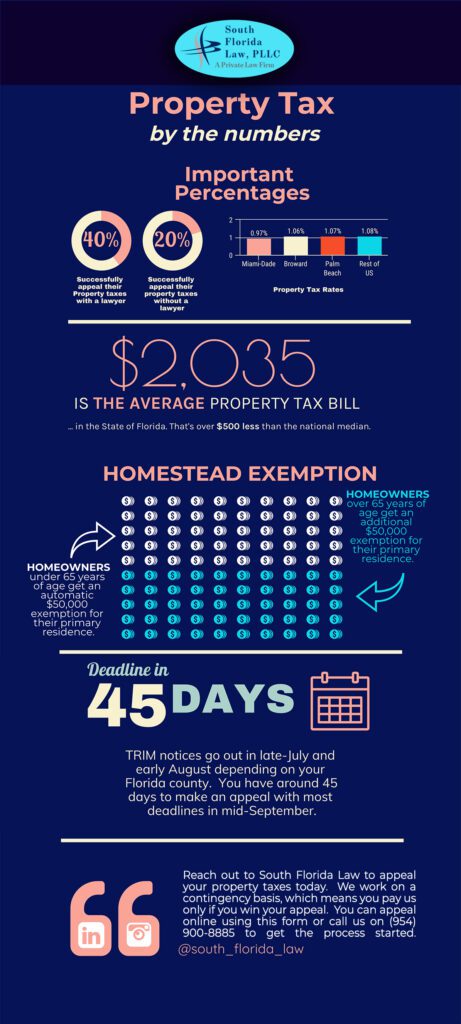
The homestead exemption is one of the most important ways to reduce property tax in Florida. If you live in your home as your primary residence, you can apply for an exemption up to $50,000. The first $25,000 applies to all property taxes, while the next $25,000 applies only to non-school taxes.
Other Common Exemptions
Florida offers several other exemptions, including:
- Senior citizen exemption for homeowners aged 65+
- Disability exemption for residents with disabilities
- Veteran exemption for qualifying military veterans
Not all exemptions are automatic. You must apply through your county property appraiser’s office.
Average Property Tax By Florida County
Property taxes can vary widely from county to county. For example, Monroe County (Key West area) often has higher tax rates, while rural counties may be lower. Let’s look at average property tax bills for some Florida counties:
| County | Average Property Tax (%) | Annual Tax for $250,000 Home |
|---|---|---|
| Miami-Dade | 0.97% | $2,425 |
| Broward | 1.09% | $2,725 |
| Orange | 1.02% | $2,550 |
| Duval | 0.99% | $2,475 |
| Monroe | 1.12% | $2,800 |
These numbers are averages. The actual tax bill may be higher or lower based on exemptions and your home’s assessed value.
Florida Property Tax Compared To Other States
Florida’s property taxes are considered moderate compared to other states. The national average is about 1. 07% of home value. Florida’s average is close to 0. 98%. States like New Jersey or Illinois have much higher rates, often over 2%.
States with lower rates include Hawaii and Alabama.
Here’s a comparison:
| State | Average Property Tax Rate (%) |
|---|---|
| Florida | 0.98% |
| New Jersey | 2.21% |
| Texas | 1.81% |
| California | 0.76% |
| Hawaii | 0.28% |
How To Lower Your Property Tax Bill In Florida
Many homeowners ask, How can I lower my property tax in Florida? There are several ways to reduce your bill:
- Apply for the homestead exemption if you live in your home full-time.
- Check for other exemptions like senior, disability, or veteran status.
- Ensure your property appraiser’s value is accurate. If you think your home is overvalued, you can challenge the assessment.
- Watch for errors in your property tax bill, such as wrong square footage or missing exemptions.
Non-obvious Insight: Save By Appealing
Many beginners miss that you can appeal your property’s assessed value. Counties allow you to file a petition if you believe your valuation is too high. This can result in lower taxes, but you must provide evidence (photos, appraisals).
Non-obvious Insight: Portability Benefit
Florida’s Save Our Homes portability lets you transfer your homestead exemption savings when moving to a new home within the state. This unique benefit can help you keep lower taxes even if you buy a more expensive property.
When And How To Pay Property Taxes In Florida
Property taxes in Florida are paid annually. Bills are usually sent in November, and payment is due by March 31 of the following year. If you pay early, you get a discount:
- 4% discount if paid in November
- 3% in December
- 2% in January
- 1% in February
Most counties allow payment online, by mail, or in person. If you have a mortgage, your lender may pay property taxes through an escrow account.
What Happens If You Don’t Pay?
If property taxes are not paid by April 1, the county can place a lien on your property. After two years, the property may be sold at a tax deed auction. Make sure to pay on time to avoid penalties.
Factors That Affect Property Tax In Florida
Several factors can change your property tax bill:
- Assessed value: The market value determined by the county appraiser.
- Location: Counties and cities set different millage rates.
- Exemptions: Homestead, senior, disability, and veteran exemptions.
- Property type: Commercial properties usually have higher rates.
- Improvements: Adding a pool or extra room can raise your tax bill.
Example: Two Homes, Different Taxes
A condo in Miami with a $200,000 assessed value and full homestead exemption might pay $1,800/year. A similar condo in Orlando could pay $2,000/year because of different millage rates.
Common Mistakes Florida Homeowners Make
Many homeowners make mistakes when dealing with property taxes:
- Not applying for the homestead exemption
- Ignoring other available exemptions
- Failing to check the accuracy of their home’s assessed value
- Missing the payment deadline and losing discounts
- Not understanding how property taxes change after home improvements
Review your bill carefully and ask your county property appraiser if you have questions.

Credit: www.floridaforboomers.com
Property Tax For Investment Properties
If you own a rental property or vacation home, you cannot claim the homestead exemption. You pay taxes on the full assessed value. Investment properties often pay higher rates than primary residences.
Future Trends In Florida Property Taxes
Property taxes in Florida may increase as home values rise. Local governments sometimes raise millage rates to fund schools, roads, and services. If you plan to buy property, check the local government’s budget and tax history.

Credit: www.yourwaypointe.com
Resources For Florida Property Tax Information
For official details and county-specific information, visit the Florida Department of Revenue website or your local county property appraiser’s office. You can find tax calculators, exemption forms, and payment options.
To learn more about property tax laws, see this guide from Source Name.
Contact An Expert For Help
Understanding how much is property tax in Florida can be confusing. If you have questions or need help lowering your bill, contact a property tax specialist. Reach out by phone at +1 (706) 844-3723 or email info@enriquebello.com for personalized advice.
Credit: www.southfloridalawpllc.com
Frequently Asked Questions
What Is The Average Property Tax Rate In Florida?
The average property tax rate in Florida is about 0.98% of the home’s assessed value. Rates vary by county, so your actual bill may be higher or lower depending on location and exemptions.
How Does The Homestead Exemption Work In Florida?
The homestead exemption allows Florida homeowners to reduce the taxable value of their primary residence by up to $50,000. You must apply for this exemption, and it only applies to owner-occupied homes.
When Are Property Taxes Due In Florida?
Florida property taxes are due by March 31 each year. You can pay early for discounts, with the highest discount (4%) offered for payments made in November.
Can I Appeal My Property Tax Assessment?
Yes, you can appeal your property’s assessed value if you believe it is too high. Contact your county property appraiser’s office and file a petition. You’ll need to provide evidence, such as recent sales data or photos.
Do Property Taxes Increase Every Year In Florida?
Property taxes can increase if your home’s value rises or if local millage rates go up. However, the Save Our Homes cap limits annual increases for homestead properties to 3% or the change in the Consumer Price Index, whichever is less.
Florida property taxes don’t have to be confusing. With the right information and careful planning, you can manage your costs and enjoy the benefits of owning a home in the Sunshine State. If you need help or have questions, don’t hesitate to contact a professional at +1 (706) 844-3723 or info@enriquebello.com. Your next step: check your county’s rates, review exemptions, and make sure your bill is accurate.